
Last Updated: November 1, 2026
Quick Summary
Stop losing leads by cutting response time to minutes, not hours, with a written response SLA that names an owner for each channel. Track speed to lead as a median, then fix the funnel stage where the biggest drop happens, starting with contact and follow-up.
- Set a written response SLA with a target for each channel, such as calls answered live within 30 seconds during business hours.
- Assign one named owner per channel per shift so inquiries are not left to shared ownership.
- Track speed to lead as a median, not an average, because one old lead can distort the average.
- Text missed callers within a minute or two with a short message that includes your name and a next step.
- Plan at least three follow-up attempts over about a week, spaced out so you do not seem pushy.
Table of Contents
- Why Your Business Is Losing Leads Right Now
- Cut Your Lead Response Time to Minutes, Not Hours
- Recover Every Missed Call Text Back
- Lead Follow-Up Scripts That Get Callbacks
- Lead Qualification Questions That Protect Your Calendar
- Measuring Lead Leakage and Booking Your First Automated Call Setup
- Frequently Asked Questions
Why Your Business Is Losing Leads Right Now
Most service businesses end up losing leads they already paid to get. A customer calls, nobody picks up, and that customer calls the next company on the list. This pattern shows up across many service businesses, including HVAC, plumbing, and medical spas.
The fix is not more advertising. It is faster, more consistent contact with people already asking for help.
Finding the Gaps: Lead-Loss Diagnosis by Funnel Stage and Channel
Before you fix anything, find where leads disappear. Track each lead from first contact to booked job and note where it stalls.
- Phone calls: Missed calls, voicemails nobody returns
- Web forms: Submissions with no reply for hours
- Texts and chats: Messages left unanswered after closing time
Look at each channel separately. A slow web form response and a missed after-hours call have different causes and different fixes.
Cut Your Lead Response Time to Minutes, Not Hours
Speed is the cheapest lever you have. A prospect who hears back in five minutes is far more likely to book than one who waits until morning. But “respond quickly” is not an instruction a team can follow, a response SLA is.
Setting a Measurable Response SLA
A service-level agreement (SLA) is a written target for how fast each type of inquiry gets a first human reply, who owns it, and what happens when the target is missed. Put it on a dashboard and review it weekly.
A practical SLA has four parts:
- Target by channel and hour. Example: calls answered live within 30 seconds during business hours; forms and chats get a first reply within 5 minutes; after-hours inquiries get a reply within 15 minutes of the next business day opening.
- A named owner per channel. One person, not “the team”, is accountable per shift. Shared ownership is how leads go uncontacted.
- An escalation path. If a lead is not contacted within the target, it escalates to the shift lead, then the owner or manager. Define the trigger (for example, 2x the target time) and the escalation channel (text alert, shared inbox flag, or CRM task).
- A weekly review. Pull every lead that broke the SLA, find the cause, and fix the cause, not the person.
An SLA nobody measures becomes a wish. Put the number on a shared dashboard the whole team can see, and review misses in the same weekly meeting every time.
How to Measure Speed to Lead
Speed to lead is the elapsed time between a lead’s first inquiry and the first human response. Track it as a median, not an average, one three-day-old lead can drag an average far from what most customers experience.
- Formula: Speed to lead = timestamp of first human reply − timestamp of inquiry.
- Report it as: median minutes during business hours, and median minutes to first reply for after-hours inquiries.
- Break it out by: channel (call, form, chat, text), hour of day, and team member or shift.
A Worked Example
Suppose a shop receives 40 web-form leads in a week. The median first reply is 6 minutes, which looks fine. But 9 of the 40 were submitted after 6 p.m., and their median first reply is 14 hours, a gap that can cost leads to other providers by morning. The fix is a specific after-hours rule: an auto-acknowledgment within 60 seconds, a next-morning callback task assigned to a named person, and an escalation if the callback is not logged by 10 a.m.
Response-Time Targets to Start From
These are starting points, not universal truths, adjust to your call volume and staffing:
| Channel | Business hours target | After-hours target |
|---|---|---|
| Phone call | Answered live in 30 seconds | Callback within 15 minutes of opening |
| Web form | First reply in 5 minutes | First reply within 15 minutes of opening |
| Chat / text | First reply in 2 minutes | Auto-reply, human reply by next open |
| Booking request | Confirmation in 5 minutes | Confirmation by next open |
Start with one channel and one target. Get the median under control before adding the next channel, a dashboard with five red numbers is harder to fix than one.
What to Do When the SLA Is Missed
Every miss is a data point. Log the reason in a consistent field, missed call, no coverage, after hours, wrong routing, staff out, so patterns show up within weeks. If most misses share one cause, fix the process; if they are scattered, the target may be unrealistic for your staffing.
FCC guidance on robocalls and automated texts
Recover Every Missed Call Text Back
A missed call is not a lost lead yet. Many callers will accept a quick text if it arrives within a minute or two.
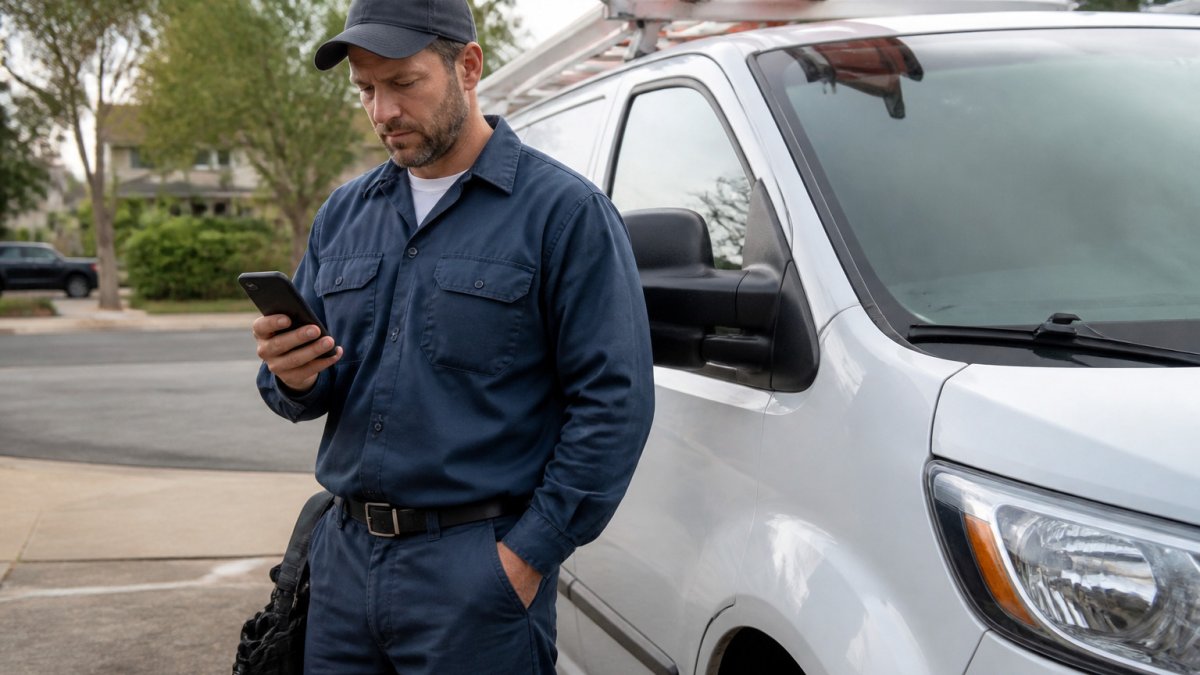
Send a short, friendly text right after any unanswered call. Include your name, your business name, and one clear next step.
For example: “Hi, this is Dana from [Business]. Sorry we missed your call. Reply here or book online at [link].”
Lead Follow-Up Scripts That Get Callbacks
Most leads do not answer the first follow-up. Plan for at least three contact attempts over about a week, spaced out so you do not feel pushy.
Use short scripts that name the reason for the call:
- Attempt 1 (same day): “You asked about a water heater repair. Can I get you on the schedule this week?”
- Attempt 2 (next day): “Following up on your request. Do you have a time that works for a quick call?”
- Attempt 3 (end of week): “Last check-in from us. Happy to help whenever you are ready.”
Keep every script short. Stop after the third attempt and log the outcome.
Consent, Privacy, and Responsible Automation
Automated texts and calls must follow the rules. Automated calls and texts are subject to federal rules, so get clear consent before sending marketing messages. Honor opt-out requests right away, and keep a record of consent.
Check current rules with the official federal regulator before launching any automated outreach.
Lead Qualification Questions That Protect Your Calendar
Not every inquiry is a good fit. Qualification saves your technicians from driving across town for a job you cannot do.
Ask three to five questions early:
- What service do you need, and how urgent is it?
- What is the service address or location?
- Is this a repair, a replacement, or a quote?
Qualification also helps you prioritize. Urgent, in-area leads should get the fastest response.
Measuring Lead Leakage and Booking Your First Automated Call Setup
Lead leakage is the share of inquiries that never become booked jobs. You cannot fix what you do not measure, and you cannot measure leakage with a single number. Break it down by funnel stage and channel, then attack the stage with the biggest drop.
The Five Stages Where Leads Leak
Track every inquiry through these stages and count how many survive each one:
- Capture, Did the inquiry reach your system at all? Missed calls, forms that fail silently, and chats that close without a record all leak here.
- Routing, Did the lead reach the right person or queue? Leads assigned to a shared inbox or a departed employee leak here.
- Contact, Did a human actually reach the lead? This is where speed to lead and follow-up completion live.
- Qualification, Was the lead a fit, and was that determined quickly? Poor-fit leads should be routed out, not chased.
- Booking, Did the qualified lead become a scheduled job? No-shows and unconfirmed appointments leak here.
A stage-by-stage audit tells you whether you have a capture, routing, follow-up, or closing problem. The fixes differ, and applying the wrong one wastes money.
Metrics, Formulas, and Targets
| Metric | Formula | What it tells you | Starting target |
|---|---|---|---|
| Contact rate | Leads with a human contact ÷ total leads | Whether leads are being reached at all | 90%+ within 24 hours |
| Speed to lead | Median minutes from inquiry to first human reply | Responsiveness | Under 5 minutes in hours |
| Follow-up completion | Leads with all planned attempts ÷ leads needing follow-up | Whether the sequence actually runs | 95%+ |
| Stage conversion | Leads advancing to next stage ÷ leads entering stage | Where the biggest drop is | Compare month over month |
| Leakage rate | Inquiries not booked ÷ total inquiries | Overall loss | Falling each month |
| After-hours capture | After-hours leads contacted by next open ÷ after-hours leads | Overnight and weekend loss | Rising each month |
Pick the stage with the lowest stage conversion first. Fixing a 40% drop at contact will move bookings more than polishing a 95% booking step.
A Worked Leakage Example
Suppose a business receives 200 inquiries in a month and books 120 jobs. The overall leakage rate is 40%. That number alone is not actionable. Break it down:
- Capture: 200 inquiries, 190 recorded, 10 lost to missed calls and failed forms.
- Routing: 190 routed, 180 to the right queue, 10 lost to a shared inbox.
- Contact: 180 contacted, 150 reached, 30 lost to slow or missing follow-up.
The biggest single drop is contact (30 leads), so the first fix is follow-up completion and speed to lead, not more advertising. This is the difference between a diagnosis and a guess.
Designing the Dashboard
Keep the dashboard to one screen. Show, per channel: contact rate, median speed to lead, follow-up completion, and leakage rate, with a month-over-month trend arrow. Add a single “misses this week” list so the team can see individual leads that broke the SLA. Review it in the same weekly meeting every time.
Booking Your First Automated Call Setup
When you are ready to automate, start with the channel that leaks most, usually after-hours calls and web forms.
LeadGuard answers incoming calls around the clock, qualifies leads, and books appointments directly into your calendar. You get an instant summary by SMS or email. Book a Demo to see how it fits your shop.
Automated outreach must respect consent and opt-out rules. Keep a record of consent and honor opt-outs immediately, see the consent section above.
Frequently Asked Questions
Why do businesses lose leads?
Most leads are lost in the gap between first contact and first response. Callers who reach voicemail during a busy job, after hours, or while a receptionist is on another line often move on to the next company that answers. Other common causes include slow follow-up after a quote, no clear qualification step that wastes staff time on poor-fit callers, and no tracking of where prospects drop out. Finding which of these applies to your business is the first step toward fixing it.
How quickly should you follow up with a new lead?
Follow up as fast as you can, ideally within minutes of the inquiry, while the prospect is still considering a provider. Set a written service-level target, such as first contact within five minutes during business hours and within the next morning after hours, then measure how often you meet it. A missed target is a signal to fix staffing, routing, or automation rather than a reason to accept slower responses.
How can you follow up with leads who do not answer?
Use a short sequence rather than one attempt. A typical pattern is a call, a text message within minutes, a follow-up call the same day, and an email or text the next day. Keep each message brief, identify your business, and offer a clear next step such as a time to book. Stop after a defined number of attempts and log the outcome.
What should you say when returning a missed call?
Open with your business name and the reason for the call, such as ‘Hi, this is Dana from Riverside Plumbing returning your call about a water heater.’ Confirm the caller’s need in one sentence, then ask one qualifying question, such as the service address or preferred time window. Keep the call focused on booking the next step. Avoid asking the caller to repeat everything the missed call was about.
